September 26, 2020

Orthodox Lip Service Versus Repentant Disobedience


For the Twenty-Sixth Sunday in Ordinary Time: A Reading from the Holy Gospel According to Matthew [21:28-32].

Jesus said to the chief priests and elders of the people:

"What is your opinion?

A man had two sons.

He came to the first and said,

'Son, go out and work in the vineyard today.'

He said in reply, 'I will not, '

but afterwards changed his mind and went.

The man came to the other son and gave the same order.

He said in reply, 'Yes, sir, ‘but did not go.

Which of the two did his father's will?"

They answered, "The first."

Jesus said to them, "Amen, I say to you,

tax collectors and prostitutes

are entering the kingdom of God before you.

When John came to you in the way of righteousness,

you did not believe him;

but tax collectors and prostitutes did.

Yet even when you saw that,

you did not later change your minds and believe him."

The first son refused to be orthodox in his words and deeds.

But he repented, changed his mind and went to do his father’s will.

The second son gave his father orthodox lip service, but there was no orthodoxy in his real deeds after all.

Listen!

Amen, I say to you,

tax collectors and prostitutes

are entering the kingdom of God before you.

When John came to you in the way of righteousness,

you did not believe him;

but tax collectors and prostitutes did.

Yet even when you saw that,

you did not later change your minds and believe him.

Enough said.


Turn. Love. Repeat.


September 24, 2020

If Only We Were More Like Herod


"Feast of Herod," by Lucas Cranach the Elder.


Luke 9:7-9 for Thursday of the Twenty-Fifth Week in Ordinary Time.


We also have heard the same things that left Herod greatly perplexed.

However, we acknowledge and venerate even more about Christ than Herod knew at the time in today’s Gospel.

How good it would be if only we were more like Herod in being greatly perplexed with amazement and curiosity.

Christ himself, the Amen, the faithful and true witness, the source of God’s
creation
, wishes we were either cold or hot, but never merely lukewarm or room temperature. [See Rev. 3:14-16.]

We need to wake up and warm up to the fact that only God is necessary, and we are not.

The existence of all creation is a mystery of God’s freedom, his will, his grace and his love.

That we are alive at all should leave us greatly perplexed, amazed, full of wonder and thankfulness.

There is more.

In the face of our forgetfulness, rebellion, sin and ingratitude, God freely chose to become the SLAVE who with his own life and death undoes our sin and suffering, and re-creates us as his partners in glory.

That did not have to happen; and by all the RIGHTS of God should NOT have happened.

In the face of the extravagant, exorbitant, outrageous mystery of our redemption, we should be even more greatly perplexed than Herod.

The mystery of our redemption and glorification through Christ’s suffering, death and resurrection is so perplexing, so completely beyond the bounds of our capacity, that we must ultimately surrender and BORROW, as it were, CHRIST’S own wondrous thankfulness, Christ’s own wonderful sacrifice in order to thank worthily the Father for all that he has done in creating and redeeming us.

Here in the Eucharist, Christ in his personal thankfulness and sacrifice is really present.

Here, God re-creates us.

Here, God redeems us.

Here, through Christ, with him and in him we give God fitting honor, glory and thanksgiving for all that he has done for us.


Turn. Love. Repeat.


September 19, 2020

Nothings Who Owe Everything


Matthew 20:1-16 for the Twenty-Fifth Sunday in Ordinary Time


With today’s Gospel parable, Christ upholds God’s boundless freedom and openhandedness.

God acts with untold freedom, and is openhanded to the point of seeming foolish and unfair.

His freedom to do what he wills goes against the belief we might at first hold in hearing this parable.

For, whereas the parable’s vineyard owner OWES his workers their earnings, God— who MADE us from NOTHING— God OWES us NOTHING.

What he gives any of us is thoroughgoing grace and openhandedness beyond all earthly reckoning.

Owing us nothing and needing nothing, God is unfathomable in the freedom with which he gives his all to those he made from nothing.

It is the freedom of thoroughgoing love.

In the face of it the most and the best we can do is fall into grateful wonder and worship.

Even in our best and greatest worship, we borrow from God.

In Christ his Son, God himself becomes the payment for what we owe him.

We can do no better than throw ourselves utterly into Christ’s sacrifice of himself.

In taking, eating and drinking his Eucharistic Body and Blood with freedom and the right goal, we are taken IN and UP with Christ in his sacrifice of perfect thankfulness and worship.

If we give ourselves over to it, the Eucharist takes, eats and drinks US into Christ up to the Father in the oneness of the Holy Spirit.

In the Father’s kingdom the first are no longer first, and the last are no longer last.

All owe a debt to God, and none but Christ can pay.

All owe a debt, but Christ alone has paid for all.

What we have left is the mission of spending our lives to worship and imitate God in his goodness to us.

Our lives need to uphold, show and flow from the Eucharistic worship we offer to God.


Turn. Love. Repeat.


September 14, 2020

All Is Upside Down and Backwards


Numbers 21:4-9, Philippians2:6-11 and John 3:13-17 for the Feast of the Exaltation of the Holy Cross of Our Lord Jesus Christ, 14 September.


How odd to speak of the Exaltation of the Cross that is a tool of humiliation, torture and execution!

How odd all the Word of the Lord is today!

In all three readings things are upside down and backwards.

Moses lifted up the lifeless image of a serpent on a pole to heal the people of deadly snakebite that came as a punishment for their sin.

Then, God’s beloved Son is to be lifted up in death on the beams of a cross, so that whoever believes in him may be healed of sin and death, and gain eternal life.

For God so loved the world that he gave his only Son ... that the world might be saved through him.

To ransom a slave and rebel, God gave up his Son.

All-Holy God pays for our sins by his own death on the Cross.

However, our benefit is the smaller part of what took place on the Cross— the smaller part of what the Gospel reveals.

Today in his Gospel the Lord speaks of himself as the Son who has received himself from the Father, has come down from the Father to the earth, and goes up back to the Father.

Today his Gospel also tells us of the Father who in love gives his Word, overflowing himself in his Son that the world might be saved through him.

Today’s Gospel unfolds the meaning of earlier words about how the Father’s Spirit is at work in us through the Son.

By Baptismal Water and the Holy Spirit, our lives misshapen by sin and death are turned upside down and backwards, and we are reborn into the Son of God, reborn into his human life, reborn into his death, reborn into his resurrection, ascension and exaltation, reborn in him as royal sons and daughters of the heavenly Father.

The invincibly living mystery of the Father, the Son and the Holy Spirit is present and powerful in the Crucified Death of Christ.

That is why we always name the Father, the Son and the Holy Spirit as we make the sign of the Cross.

God, who is Love lifted up on the Cross, draws us all to himself, to his fulfillment of love on the Cross.

That is the lure, the beauty, the triumph and Exaltation of the Cross, though by nature it be a tool of defeat and shame.

God in Christ in his love on the cross freely chose to undergo, undertake and underlie all that is human even unto death.

This truth, this historical event has the power to draw all that is in our hearts, minds, strength and will.

We need to know, have, and return this love emptying itself on the Cross— love absolutely present and absolutely fulfilled in history, flesh and blood.

Here in the humble and exalted Eucharistic Flesh and Blood of Christ:

the power of the Spirit gives us birth and life in God;

the Father reveals and gives his love;

and the Son offers himself and our own humanity,

through the power of the Spirit,

to the Father with obedience and gratitude.

On his Cross, in his Resurrection, Ascension and Eucharist, Christ our God and Savior gives us triumph and exaltation.


Turn. Love. Repeat.


September 12, 2020

Ugly Jesus: God Is a Bean Counter Who Uses Torture


Matthew 18:21-35 for the Twenty-Fourth Sunday in Ordinary Time.


It was Christ’s way to teach with tales that at times went over the top.

His teaching in today’s Gospel did it, and left no room for any if, and, or but.

God forgives us, so we must forgive others.

That was Christ’s teaching in today’s Gospel, but he hammered it out with a frightful tale.

Let us mark these ugly images, and so let Christ drive home his teaching.

First: that the kingdom of heaven is like a king who kept a reckoning of everything his servants owed him.

God as a bean counter!

Then Christ added to that ugliness.

One servant could not pay back his overwhelming borrowings.

So the king set to sell him along with his wife, children, and belongings to begin to get what was owed him.

That is a foul image of God.

But then Christ turned that ugliness into beauty.

The servant begged for mercy and time to pay the king back in full.

The king could have done well and good to say: I will give you time, and you shall pay me back in full.

However, Christ instead said the king mercifully forgave the loan and let the man go free.

Christ then went on with the lesson, but brought back into it more ugliness.

The servant went and without mercy jailed a fellow servant who owed him much less.

The king heard of it, took the merciless servant he had forgiven, and now handed him over to the TORTURERS.

TORTURE— and Christ using it as an image of God’s ways!

Torture, as the Catechism of the Catholic Church [2297] says, is a sin against respect for the person and for human dignity.

Speaking of TORTURE, Christ brings his tale to a threatening end.

So will my heavenly Father do to you, UNLESS each of you forgives your brother from your heart.

The heavenly Father as a bean-counting king who can be merciful, but also turns to TORTURE!

A tale of frightful, over-the-top ugliness!

However, the ugliness is not the goal, but only a tool to hammer home the teaching: God forgives us, so we must forgive others.

Christ filled out this teaching with the true tale of his own life, death, and resurrection.

We still have and witness the living true tale of Christ in the sacraments and the Mass throughout the Church year.

The living tale of Christ in all his truth, all his might and all his work comes to us whenever we celebrate, offer and receive his Eucharistic Body and Blood.

It is here for us at this hour in this church.

In this living, true tale, Christ is the king, while you and I owe him.

He does not sell us along with our families and belongings.

In the Eucharist, the Living True Tale of Christ in Flesh and Blood, our King and God has sold HIMSELF to buy us back for our own sakes and to pay off what WE owe HIM.

He shouldered our sin-guilt, the debt we owe him.

He is the Lamb of God who takes away on his own back the sins of the world.

He did so even before we dared to ask.

When we do ask him for mercy, we are asking our King to take onto HIS own self OUR sin-guilt.

But then the Living True Tale of Christ goes over the top unspeakably more.

He— our King, Master, Creator, Lord and God— willingly underwent TORTURE for the debt of our sins against him.

In return for his taking on our guilt, he lays his godliness, innocence and inheritance upon us.

This wonderful exchange of our humanity for his divinity, our guilt for his innocence, our sin-enslaved creaturehood for his divine sonship— all this is again present, renewed and strengthened in us when we celebrate, offer and receive the Eucharist.

In the Eucharist, food and drink really become the Body and Blood of Christ, exchanged for the debts of us sinners.

By the Eucharist we share in Christ’s Life, Work, Suffering, Death, Resurrection, Ascension and Holy Spirit.

As we draw near to it, we declare our guilt, so as to be eligible for Christ’s innocence.

For that exchange, we are over the top in owing thanksgiving and worship.

The tale is more than true: God has forgiven, so we must forgive, lest frightful ugliness be our only lot forever.


Turn. Love. Repeat.


September 10, 2020

Mercy: Diffuse It or Lose It

Pixabay / Public Domain.


Luke 6:27-38 for Thursday of the Twenty-Third Week in Ordinary Time


In today’s Gospel, Christ calls us to follow our heavenly Father and show him to the world through generosity that is boundless, unreasonable and careless.

God creates, loves, and saves us with boundless, unreasonable and careless generosity.

Natural human love normally has REASONS behind it.

Something in another draws us; or something in us pushes us toward another.

Faith in God who IS Love gives different reasons to love others than the natural and normal human reasons.

God creates and loves us without needing us or owing it to us.

God loves us for no reason but his own goodness and freedom.

Nothing in US gives God a reason, attraction, motive, or obligation to love us.

Love that is DESERVED or EARNED does not come from God, whose love is totally free.

God’s love has no needs, likes or dislikes.

God’s love is absolute might and freedom to be faithful forever, no matter how detestable the circumstances— even when we reject and deny him, even when we do evil.

God alone can love in THAT way.

God does NOT love us for what we HAVE or not, what we DO or not, what we ARE or not, HOW we are or not.

We cannot attract, deserve or obligate God’s love.

Nonetheless, God HAS chosen us, and God DOES love us.

Christian faith gives our self-esteem and sense of dignity a foundation in the mystery of God, who loves out of his own goodness and freedom.

So Christ calls us to let go of all other sources of security, comfort, confidence and self-esteem, because those are nothing before God.

God in Christ calls us to esteem and love others— whether friends or foes— NOT because of what they have, do or are, but because GOD esteems and loves them.

As Christ said in today’s Gospel: Be merciful, just as also your Father is merciful.

In that way we live mercifully as sons and daughters of God.

Here in the Eucharist of the Son of God, we eat and drink God’s merciful new and eternal covenant ... for the forgiveness of sins.

Thereby he commands us to live his mercy in our thoughts, words and deeds: Do this in memory of me.


Turn. Love. Repeat.


September 08, 2020

The Feast of the Nativity of the Blessed Virgin Mary


The Mother of God, St. Joachim and St. Ann

Matthew 1:1-16,18-23


The Word of God tells us that everything our heavenly Father wills always meets with the eternal “yes” and living gratitude of the divine Son.

The Father’s will and the Son’s obedient gratitude are also alive with the eternal power and communion of the Holy Spirit.

The Father’s will, the Son’s obedience and gratitude, the Spirit’s power and communion— this is the Love that made the universe.

We came into being from the will of the Father, from the obedient “yes” and living gratitude of the Son, and from the power and communion of the Spirit.

However, through sin we have shut our eyes and turned our backs against this Love that made us.

Scripture tells us that after Adam sinned, he tried to hide from God.

We have shut our eyes and turned our backs against the will of the Father, against the obedience and gratitude of the Son, and against the power and unity of the Holy Spirit.

In the face of our sin, God who made us has chosen neither to annihilate us nor force himself upon our freedom.

Instead, God has given creation a new beginning, and freely offers us this new beginning of creation as a gift.

God has done this in Christ the New Adam.

In the beginning God made the body of the first Adam from the virgin earth.

To form the body of Christ, the Sinless New Adam, God again prepared the earth through the virgin and sinless humanity of Mary.

She whose birth we celebrate today is the dawn, the threshold and the mother of our salvation.

She is ever sinless and ever virgin by the will of the Father, through the obedience and gratitude of the Son, and in the power and unity of the Holy Spirit.

Upon receiving God’s message through an angel at Nazareth, Mary gave her own “yes” to God’s plan…

her “yes” to the will of the Father…

her “yes” to the obedience and gratitude of the Son…

her “yes” to the power and unity of the Spirit.

Pope John Paul II pointed out in a lovely manner that Mary is the human race’s “yes” to God’s plan, and that she is God’s “yes” to our salvation.

Out of Mary’s “yes” is born our salvation in Christ Jesus.

In him the Son of Mary, in him the New Adam:

we return to the will of the Father;

we return in the obedience and gratitude of the Son;

we return through the power of the Holy Spirit.

Mary gave birth to all of this.

Indeed, not only “happy” but most blessed is her birthday.

Blessed is she who bore and nursed our Savior.

Holy Mary, Mother of God, pray for us sinners now and at the hour of our death! Amen.


Turn. Love. Repeat.


September 06, 2020

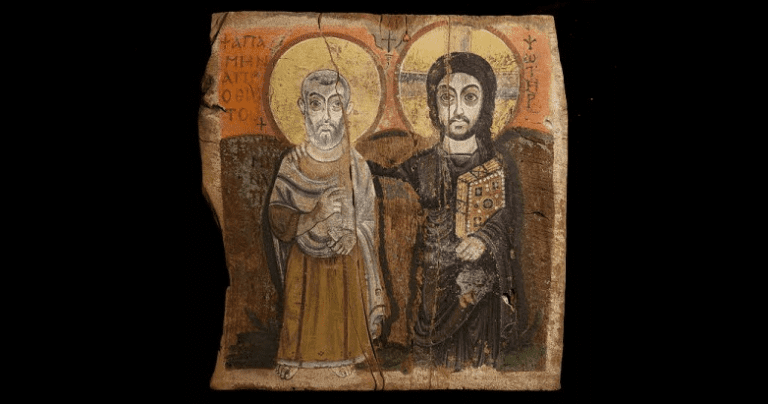
Jesus, Remember Me When You Come Into Your Kingdom

Christ and Abbot Menas
“Christ and Abbot Menas,” Louvre Museum. Public Domain / Wikimedia.


Matthew 18:15-20 for the Twenty-Third Sunday in Ordinary Time.


What is it to be two or three gathered in the name of Christ?

Today in his Gospel, Christ is speaking not to a crowd, but to his disciples only; and he uses the word church.

Speaking to his disciples as his church, he expects them to act and pray as those who are gathered together in my name.

We begin every Mass by having gathered together and invoking the name of the Lord— Father, Son and Holy Spirit— while we make the SIGNUM CRUCIS— the Sign of the Cross.

At the CRUCIfixion of the Lord, at the most literally CRUCIAL moment, only his mother, a few other women and the disciple John gathered together in Christ’s name at the event and sign of his cross.

Out of this small group, Christ singled out just two, and put them together as if these two were the closest to him in name and in deed.

They were his mother and his disciple John.

From his cross, Christ said to his mother: Woman, behold, your, son!

Then he said to his disciple: Behold, your mother!

It was from the CROSS that Christ assembled the CHURCH in his NAME.

From the cross, he spoke directly to only two other individuals besides his mother and John.

He spoke directly to the repentant criminal who was also suffering crucifixion, and he spoke directly to the Father in heaven.

To be two or three gathered in Christ’s name is not so simple or automatic, and it appears it is not entirely or always our initiative.

Even though Christ himself promised to be in the midst of those gathered in his name, it still belongs to Christ alone to judge who are REALLY gathered in his name.

At the most literally CRUCIAL moment— at his CRUCIfixion— the only individuals to whom Christ spoke directly were his heavenly Father, his mother, John his disciple and the repentant criminal.

Of these four, the only one whose relationship to Christ we could fully claim for ourselves would be that of the repentant criminal.

To gather in Christ’s name and to receive his presence in our midst, we must repent and confess that we are sinners.

Indeed, that is how the Church begins the Mass: confessing that we are sinners.

I confess to almighty God and to you, my brothers and sisters, that I have greatly sinned….

Then, in the Sacrament of the Eucharist, the Sacrament of His Body and Blood Offered in Sacrifice on the Cross, the Crucial Sacrament, Christ himself makes good his promise to be in our midst.


Turn. Love. Repeat.


August 29, 2020

Our Revolting Lord


For the Twenty-Second Sunday in Ordinary Time


Jeremiah 20:7-9. Romans 12:1-2. Matthew 16:21-27.


Everything in the Gospel today aims at our receiving as a reward our lives and our salvation when Christ returns with his angels in the glory of his Father.

Christ begins his Gospel today telling us that he will suffer and die at the hands of the nation’s elders and religious authorities.

Why?

It was for us men and for our salvation, as we say in the Creed every Sunday.

However, today Christ calls our salvation a repayment he shall give everyone according to his conduct.

A repayment to each CONDITIONED according to his conduct.

For the Son of Man will come with his angels in his Father’s glory, and then he will repay everyone according to his conduct.

What is the conduct that earns the repayment, but also, what IS the repayment?

The conduct is the conduct of Christ himself, and the repayment is rising from the dead, as Christ rose from the dead.

Risen from the dead, Christ can die no more and can suffer no more.

Resurrection in Christ is life without bounds and joy without measure.

Faith in that truth can give us motivation to follow Christ, even though Christ today gives a repulsive description to his path.

Whoever wishes to come after me— come after me into the resurrection— must deny himself, take up his CROSS, and follow me.

Without a doubt, we can say those who first heard him found his words repulsive.

Taking on a CROSS— an ancient instrument of public SHAME, TORTURE and DEATH.

More recent versions?

Whoever wishes to come after me must undergo: public torture and lethal injection, or public torture and gas chamber, or electric chair, firing squad, guillotine, or noose.

The Gospel today is not inviting, but it’s revolting.

Is there an alternative to public torture and execution for someone who wants to follow Christ into the resurrection?

Yes and no.

Christ says today whoever wishes to save his life will lose it, but whoever loses his life for my sake will find it.

Christ lost his life for OUR sake, and he found a new life on the other side of resurrection.

It’s role-reversal in some respects.

All the trouble started with role-reversal.

In the Garden of Eden, we tried role-reversal; we tried to be God, to remake ourselves by ourselves, to redefine life and death.

The role-reversal required us to reject God as God and to reject ourselves as God had made us.

Try as we might, we can’t go back to the way things were in the beginning.

We cannot reverse our own attempted role-reversal.

The genius of God in Christ was to do the role-reversal himself.

God in Christ became a man.

God in Christ took on himself the lot of every sinner.

God in Christ suffered and died at the hands of sinners for the sake of sinners, and was buried.

On the third day he rose from the dead— thereby taking the role reversal beyond all its possibilities.

A dead man rose and ascended in flesh and blood to take God’s throne in heaven.

Humankind in Paradise was not able to take God’s place.

However, humankind in Christ sits on God’s throne.

Christ, the Son of Man and Son of God, has opened up for us the inviting possibility of following him onto God’s throne.

Sounds nice.

But still, what about taking on the cross, torture, execution?

The revolting condition for boundless life and joy at God’s throne simply means that we must not allow ourselves or anything to stand in the way of letting God be God.

We let God be God, and we push ourselves and everything out of the way to pray and worship God.

The second reading from the Word of the Lord today, the Letter to the Romans, tells us:

offer your bodies as a living sacrifice, holy and pleasing to God, your spiritual worship. Do not conform yourselves to this age but be transformed by the renewal of your mind....

We also let God be God whenever for his sake and imitation we serve the good of others.

We let God be God whenever we deny ourselves in the service of God and others.

We let God be God whenever we accept willingly whatever suffering comes our way for the sake of Christ and following Christ.

Here in his Eucharist, as always, Christ lives out his Gospel.

Here is role-reversal: God is the banquet for sinners.

Here he is alive for our sakes.

After we receive his life in his Eucharist, to live for him in return is to find our own joy and our lives everlastingly with the angels in the glory of the Father when Christ returns.


Turn. Love. Repeat.


August 26, 2020

Giving 'Em Hell


Matthew 23:27-32 for Wednesday of the Twenty-First Week in Ordinary Time


Today’s biting Gospel is only a small part of a longer tongue-lashing Christ gave the scribes and Pharisees.

In his drawn-out broadside he went so far as to call them children of hell.

The everlasting woe we call hell does not show up fully in the Old Testament as a straightforward truth.

Heaven as a reward for human persons also does not show up in the Old Testament that sees heaven as the dwelling of none but God.

Christ at last broke into history with the naked news of an everlasting hell for the wicked and of everlasting heavenly life with God for the righteous.

Christ was hard on the scribes and Pharisees— he gave them hell, as the saying goes— because they would not acknowledge they were sinners needing to repent, to change their minds, their wills, their deeds.

Such conversion is the true and straightforward way for meeting Christ ON HIS TERMS in his Eucharistic Body and Blood.

We know this is true if we mark and mind the words Christ says in giving us his Body and Blood at every Mass.

Take... eat... my Body... given up for you... drink... my Blood... poured out for you... FOR THE FORGIVENESS OF SINS.

Those are Christ’s terms for his giving and our taking his Body and Blood.

If— like the scribes and Pharisees— we do not repent, then we cut our own selves off from the forgiveness of sins.

That was not what Christ in his love wanted— not for the scribes, not for the Pharisees, not for us.

Repent, and believe in the Gospel!


Turn. Love. Repeat.


August 23, 2020

Building the Church on Revelation and Failure, Not on Opinion and Success


Matthew 16:13-20 for the Twenty-First Sunday in Ordinary Time


This day in the Gospel was the SECOND time that Christ spoke of building upon rock.

The FIRST time was at the end of his Sermon on the Mount, where he said:

Every one then who hears these words of mine and does them
will be like a wise man who BUILT his house upon the ROCK;
and the rain fell, and the floods came,
and the winds blew and beat upon that house,
but it did not fall, because it had been founded on the ROCK. [Mt. 7:24-25]

Following God in Christ is the way to build a house solidly on rock to last us unto entering the kingdom of heaven.

On the other hand, if we do not bother to work at following God in Christ, then we are building on sand a shaky house doomed to fall.

It is as Christ warns in his Sermon on the Mount.

“Not every one who says to me, ‘Lord, Lord,’ shall enter the kingdom of heaven,
but he who does the will of my Father who is in heaven.
On that day many will say to me,
‘Lord, Lord, did we not prophesy in your name,
and cast out demons in your name,
and do many mighty works in your name?’
And then will I declare to them,
‘I never knew you;
depart from me, you evildoers.’ [Mt. 7:21-23]

In TODAY’S Gospel, there are two layers to the ROCK upon which to build our obedience to God.

The deepest layer is the heavenly Father revealing the Christ, the Son of the living God.

The upper layer is in Simon Peter who took in and spoke what was NOT his OPINION as a man of flesh and blood.

No, Simon Peter took in and spoke a REVELATION from GOD THE FATHER.

Simon Peter said: You are the Christ— Messiah, Anointed One— the Son of the living God.

Christ answered him:

Blessed are you, Simon son of Jonah.
For flesh and blood has not REVEALED this to you,
but my heavenly FATHER.

Then Christ changed Simon’s name: you are Peter— Pétros, Rock— and upon this rock I will build my church.

As rain, floods and wind come to naught against a house built on rock, so the netherworld shall not prevail against the CHURCH that Christ chose to build on Peter and the revelation Peter received from God the Father.

This is the FIRST time that Christ has spoken the word CHURCH in the Gospel.

So, we must pay CAREFUL attention to what he says about building his church.

AS SOON AS Christ finished today’s words in the Gospel, he went on to tell just how building his church would happen.

Jesus began to show his disciples
that he must go to Jerusalem and suffer greatly...
and be killed and on the third day be raised.

That is how Christ builds his church.

To the world, it seems the church is built on sand as something worth condemning and knocking down.

But Christ does not build his church out of SUCCESS, as the WORLD sees success.

Christ builds his church out of his SUFFERING AND DEATH.

It is only after the DEATH of Christ and then his resurrection that the gates of the netherworld fail to prevail against the church of Christ.

The church of Christ is not truly built by succeeding as the world sees succeeding.

No, the church of Christ is built on the rock of confessing in word and deed what God the Father wills to reveal in the suffering and death of Christ.

Only then do the gates of the netherworld... not prevail against the church.

Christ teaches and builds us through our solid union with the faith of Peter the Rock.

But even Peter the Rock had to face that Christ held it SATANIC [Mt. 16:23] to think that Christ’s suffering and death were not how Christ should build his church.

With Peter the Rock we must face that lesson as the will of the heavenly Father.

“Not every one who says to me, ‘Lord, Lord,’
shall enter the kingdom of heaven,
but he who does the will of my Father who is in heaven.”

Through Peter the Rock, Christ has bound and loosed us for a new and eternal covenant of doing the heavenly Father’s will by embracing communion in the suffering and death of Christ.

THIS IS MY BODY
MY BLOOD
OF THE NEW AND ETERNAL COVENANT
FOR THE FORGIVENESS OF SINS

The church of Christ is truly built only through the COVENANT of the flesh-and-blood suffering, sacrifice and death of Christ before the resurrection of Christ over the netherworld.

Here and now we are celebrating that COVENANT.

Our taking the Body and Blood of Christ COMMITS us to renew our willing work to obey in our daily living all that the heavenly Father teaches us in Christ.

DO THIS IN MEMORY OF ME.

If we do not, then we are just playing with sand all the days of our life.

We might succeed in the world’s sandbox of success, but without building anything to last us into the kingdom of heaven.


Turn. Love. Repeat.


August 16, 2020

Greater Wishes


"The Canaanite's Daughter," by J. Tissot. Brooklyn Musem / Public Domain.


Matthew 15:21-28 for the Twentieth Sunday in Ordinary Time


In this Gospel, the sick girl’s mother is one of the Canaanites— who are foreigners, enemies, worshipers of heathen idols.

The first thing the sick girl’s mother called Jesus was LORD, SON OF DAVID.

With that name, she prophetically acknowledged Jesus to be the chosen Messiah, the Anointed One of the God of ISRAEL.

Lord, Son of David!

After that, her brave persistence in begging for help is only secondary.

Jesus came as the Messiah of the JEWS— God’s CHOSEN PEOPLE.

Every human being is able to become a CHOSEN ONE of God through the mercy of God and faith in Jesus as the Messiah promised to the Jews.

Today in his Gospel, Christ emphatically asserts that his mission was for Israel.

However, he fulfilled his mission by suffering and dying for Israel and for ALL of sinful humanity.

Like the Canaanite woman today, we also beg for healing, whether of body, mind or spirit, whether for ourselves or for others.

Christ carried our sins, weaknesses, diseases and our death; and he destroyed them in himself by his own suffering and death on the Cross.

He can offer us particular healings of body, mind or spirit.

However, those are merely crumbs on the floor compared to what he offers us in his Eucharist.

Faith in Christ offers us SALVATION: the privilege to eat at the table of the sons and daughters of God— and not as mere FOREIGN GUESTS, but as SONS AND DAUGHTERS brought to birth within Christ’s Body— NATIVE sons and daughters born of God through faith and baptism.

We might continue to pray for mere crumbs.

Yet God himself gives us the whole table— and his dining room as well.

In his Son Christ Jesus, God himself is the Open Door through which we enter.

God in Christ is the gracious host who serves us at table.

God in Christ is the Living Food and Drink set before us.

When we partake of this Banquet as God’s children with faith and fidelity, God gives us the gift of a full, undivided share in his own life.

In his Gospel today, Christ finally answered the Canaanite woman’s pleas for the healing of her daughter.

O woman,
great is your faith!
Let it be done for you as you wish.

With his Eucharist, he says to us: Let it be done for you even BEYOND your wishes.

Let us at least begin to wish what GOD wishes.


Turn. Love. Repeat.